Pages

Showing posts with label Supercars. Show all posts

Monday, March 7, 2011

Ferrari FF gets a ride in a Chinook helicopter【Video】


The new V12 Ferrari for the first time on the road, After the great feedback generated by the FF at the Geneva car show.

With its latest supercar, Ferrari has introduced a controversial ‘shooting brake’ hatchback bodystyle, a fully redesigned 651 horsepower and 504 pound-feet of torque 6.3-liter V-12 with direct injection technology and seven-speed ‘F1’ dual clutch transmission, and of course an advanced four-wheel drive system, a first for Ferrari.  

With just a few days to go until the press is given access to the shooting brake concept, two of the four-wheel drive models have been air lifted to the top of Plan De Corones in the Dolomites. At 2,350 meters (7,710 feet) above sea level, a special ice and snow track has been constructed where journalists will test the cars under slippery conditions.


Press Release

The FF at the top of Plan de Corones at 2,350 metres


Maranello, 10 March 2011 - Only a couple of days to go for the start of the FF tests by the press, where journalists from all over the world will drive the new V12 Ferrari for the first time on the roads of the Alto-Adige region: two Ferrari four-seaters with four-wheel drive have been taken to the top of Plan De Corones in the Dolomites at 2,350 metres, where a special ice and snow track has been prepared for the cars, located at the start of the vast ski area, where the journalists will test the cars under fierce conditions.

The cars have been taken to this area, which can only be reached by the ski-lifts, with a CH-47 Chinook transport helicopter from Viterbo's 1st Regiment Antares and the help of three Agusta 205 helicopters from the 4th Regiment Altair from the Italian air force in Bolzano. The cars were loaded into the transport helicopters and flown around the Dolomites, before they were carefully unloaded. In this much-anticipated event, with headquarters in Brunico, almost 200 journalists from the world's most important publications will participate over the next four weeks. After the great feedback generated by the FF at the Geneva car show now this revolutionary 12-cylinder from Ferrari is finally debuting on the road.

Sunday, February 6, 2011

2012 Pagani Supercars Huayra The Lightest Sports Cars In Its Class

2012 Pagani Supercars Huayra The Lightest Sports Cars In Its Class
Speed is great, but a true hypercar can dance with the best of them. Elegant and muscular the Pagani Huayra merges the past, present and future in a timeless interpretation of automotive art. Pagani have officially unveiled their 2012 Huayra. The hypercar is named after Aymara god Huayra Tata, god of wind. Aerodynamics are a big part of the new car which will be displayed publically for the first time at the Geneva Auto Salon 2011. The styling of the car was perfected over the course of 5 years to find each line's beginning and end. During this study, eight scale models were created, as well as two 1:1 models, each an evolution of the previous in a never ending quest to perfect the form and refining the substance.
The new central monocoque on the 2012 Pagani Supercars Huayra The Lightest Sports Cars In Its Class is an entirely new design made from carbontitanium. However, with the gull wing doors cutting deep into the roof, much research was focused on achieving the highest levels of rigidity through the application of new advanced composite materials and technologies first tested on the Zonda R.
2012 Pagani Supercars Huayra The Lightest Sports Cars In Its Class
The never ending quest for weight reduction resulted also into the combination of structural and non-structural or aesthetical elements. An example is the integration of all ventilation air ducts into the monocoque's structure, making the use of additional parts and ducts unnecessary. The result of this attention to detail is a vehicle weighing 1.350 kg making the Pagani Huayra the lightest sportscar in its class.
2012 Pagani Supercars Huayra The Lightest Sports Cars In Its Class
Mercedes-AMG provides the heart for the 2012 Pagani Supercars Huayra The Lightest Sports Cars In Its Class. The 60 degree 12 cylinder turbocharged engine with a displacement of 5980 cm3 has been developed not just to meet the strictest technical and quality requirements, but also to give the car its many faces. The calm and harmony of driving one of the world's most refined GT car is interrupted when the driver calls upon the Pagani Huayra to unleash its 700 horsepower and 1000 Nm of torque. The turbos have been studied to offer immediate response to the slightest throttle input, giving the driver full control over the engine at any rpm and preventing unwanted delays in the delivery of power.
The engine's systems have been designed and tested to stand up to the most adverse conditions of temperature and performance. The 2012 Pagani Supercars Huayra The Lightest Sports Cars In Its Class has been subjected to the highs of Death Valley and the lows of the Arctic Circle. The two lateral radiators are positioned in the front to guarantee the best cooling efficiency of the intercoolers placed over the cylinder heads. Dry sump lubrication ensures an optimal oil feed to the engine even when the car is subjected to the most extreme lateral accelerations. It also regulates the oil flow so that only the necessary amount of lubricant is actually pumped into the engine from the external oil tank, reducing the friction caused by an excessive volume of lubricant inside the engine sump. An oil/water heat exchanger reduces warm-up times by heating the engine lubricant during cold start and keeps engine coolant and lubricant levels at steady operational temperatures. Extensive weight saving programs led to ingenious yet simple solutions.
2012 Pagani Supercars Huayra The Lightest Sports Cars In Its Class
The M158 engine is homologated to meet the strictest environmental regulations, EU5 and LEV2. Despite the increase of power compared to the other Mercedes-AMG V12 engines developed for Pagani, CO2 emissions as well as the fuel consumption have been reduced, to make the Pagani Huayra class leading amongst 12 cylinder sports cars with values that are respective of much smaller vehicles in the market. The two stage fuel supply system features two microprocessor controlled pumps feeding fuel to the engine with the second pump only activated when necessary, thus reducing the energy required to run the fuel pumps and eliminates the waste of excessive fuel being transported and heated in the fuel lines. This efficiency combined with a large 85 liter fuel tank ensure Pagani Huayra's grand touring ability.
The power and prodigious torque generated by Pagani Huayra's V12 are transferred to the wheels through a transverse sequential seven speed gearbox and a dual plate clutch and the complete gearbox weighs only 96 kg. Keeping the weight of the rear overhang as low as possible has been a priority as we aim for a neutral behavior at the limit. A further benefit of this layout is a better behavior of the car during a rear impact. A dual clutch system was evaluated but ultimately not selected as it would have increased the weight by approximately 70kg, thus negating any minor improvement in shift-time. Xtrac already supplied the gearbox for the Zonda R and so it was the natural choice for the development of a new high performance gearbox.
Pirelli say "Power is nothing without control" and to assure complete control for the driver Pirelli has developed the bespoke P Zero tires, specifically for the 2012 Pagani Supercars Huayra The Lightest Sports Cars In Its Class. The Pirelli engineers were faced with a demanding task, combining road holding for excitement behind the steering wheel and lower rolling resistance to reduce CO2 emissions and fuel consumption. These P Zero tires are built in a dedicated MIRS™ (Modular Integrated Robotized System) facility, dedicated to the production of ultrahigh performance tires and are at the forefront of what is technically possible, suited to top speeds above 370 kph as well as to lateral forces exceeding 1,5 G.
2012 Pagani Supercars Huayra The Lightest Sports Cars In Its Class
The aerodynamic concept of the Pagani Huayra is that of a wing. The vehicle can modify the properties of this wing by varying the front ride height, which can be adjusted dynamically, and by adjusting the 4 control flaps on each of the four corners of the car. The goal is to have a neutral vehicle behavior under all conditions and control body roll via aerodynamic means. The behavior of the flaps is managed by a dedicated control unit that is fed information from the ABS and ECU, which pass information about the car's speed, yaw rate, lateral acceleration, steering angle and throttle position.
The system improves aerodynamic efficiency in a variety of driving conditions, where a low drag coefficient is not the determining factor. During braking, for example, the rear flaps and the front suspension are raised to counteract the weight transfer and balance the weight distribution between front and rear axles, allowing a better use of the rear brake force.
Another vital design tenant for the Huayra project was to ensure clean airflow over the body of the car. In addition to the downforce generated by the flaps and body, two high negative pressure areas were designed into the shape of the underbody and the diffuser at the rear, thus enhancing the aerodynamic stability and guaranteeing the 2012 Pagani Supercars Huayra The Lightest Sports Cars In Its Class downforce under all circumstances. As soon as the doors are closed the Pagani Huayra transports the occupants to a new dimension; a world that pleases and surprises the senses. Having everything at arm's length is not close enough for a vehicle with the capabilities of the Pagani Huayra.
2012 Pagani Supercars Huayra The Lightest Sports Cars In Its Class
A Pagani is able to present drivers with state of the art solutions while still drawing on the rich history that precedes it. The ever present emphasis is on a living breathing being rather than a digital one. The high definition central touchscreen is the heart of the vehicle infotainment system, controlling audio functions, satellite navigation, secondary vehicle functions and Bluetooth phone. To this date five prototypes have been built which have been conducting road tests for the past 4 years. Currently, over half a million kilometers have been covered by our prototypes and before entering the US market we will have reached one million test kilometers.

Monday, January 24, 2011

2011 Ferrari Sport Cars Ferrari Enzo Concept By Peter Simon Design

2011 Ferrari Sport Cars Ferrari Enzo Concept By Peter Simon Design
Based on the Credo E-Bone form language, Peter Simon designed an incredible Ferrari concept. This designer takes the Italian dynamic and organic, soft shapes that are closest to nature. Inside and out, this vehicle is meant to radiate energy and power. The inspiration is no less than animal and human bones, creating a dynamic supercar that’s highly energetic.
This is the Ferrari Sport Cars Ferrari Enzo, the cars that never ever stops, but appears to sit in time even as it flies down the highway. In the event that our fantasy does come true, concept cars designer Peter Simon already has an idea of what he thinks the Enzo successor is going to look like.
2011 Ferrari Sport Cars Ferrari Enzo Concept By Peter Simon Design
Featuring a far more aggressive nose and front end than the real Enzo, Simon’s concept work is the personification of a car that certainly poses a design identity that’s all its own.
According to Simon, the inspiration behind his work was taken from – get this – human and animal bones. Simon took his inspiration, weird as it sounds, and combines with the flair of Maranello to create a striking study that boasts of swooping angles that we’ve never seen from an actual Prancing Horse.
2011 Ferrari Sport Cars Ferrari Enzo Concept By Peter Simon Design
It’s not hard to imagine what the world would be like if Ferrari did come out with a successor to the venerable Enzo supercar. As one of the meanest and most awesome supercars to come out of Maranello in history, the 2011 Ferrari Sport Cars Ferrari Enzo Concept By Peter Simon Design certainly has no equal – that is unless a successor to it comes along down the road.
2011 Ferrari Sport Cars Ferrari Enzo Concept By Peter Simon Design

Saturday, January 8, 2011

2011 Dagger GT Super Sport Cars TranStar Racing

 2011 Dagger GT Super Sport Cars TranStar Racing
The Super Sport Cars "Extreme" is back! The American creation. The 2000 hp, 300 mph Dagger GT's design objectives are to be the best-looking, fastest Supercar in the world. This  Super Sport Cars is being specially designed, very deliberately and explicitly, to break all world records and to bring back the most popular class of race car: the unlimited class which has been regulated, restricted and compromised into extinction.
 2011 Dagger GT Super Sport Cars TranStar Racing
”Dagger” meaning in English, dagger, it is clear that the Americans from TranStart Racing have high ambitions. The supercars world is enriched with an American creation: TranStar Racing Dagger GT. Dagger GT concept car is based on the middle of this incredible machine, Cheetah Corvette, made by a brilliant industrial designer, Ivan Luccion. Our lead designer consultation is Phil Frank, the designer of the world record for the Saleen S7 super recently won the 24 hours of LeMans.
 2011 Dagger GT Super Sport Cars TranStar Racing
While the new Bugatti Veyron 16.4 Super Sport Cars has just entered the Guinness Book of Records with an average top speed of 267 mph, a new 2000hp 2011 Dagger GT Super Sport Cars TranStar Racing supercar is about to become the fastest supercar in the world. Tom Nelson, from Nelson Racing Engines is an integral part of the “dream team” his company is the top “big horsepower” engine builder in the U.S., 2011 Dagger GT Super Sport Cars TranStar Racing has selected Tom’s multi-fuel (petrol/methanol/hydrogen/ethanol), aluminum 572 Twin Turbo as their preferred engine for its combination of streetability and extreme horsepower – 2000 hp on racing fuel.
Expected performance figures are equally astounding: 0-60 mph in 1.5 seconds, quarter mile in less than 6.7 seconds and a top speed of over 483 km/h (300mph). The outer body is made from carbon fibre, while a high-strength 4130 Chromoly Steel chassis forms the inner structure.
From a technical standpoint, the car have under the hood of a General Motors V8 engine in the “big thing” style: 9.4-liters and attention, 2000 HP! There is no mistake, the Americans announced a power worthy of Gargantua. In addition, the engine will be capable of a peak torque of no less than 2000 lb-ft of torque! Again, is not a typing mistake.
2011 Dagger GT Super Sport Cars TranStar Racing
Dagger GT’s will be made available in three different ’Race’ models:
    * Dagger GT-R will be their road racing model, with a dynamic, computer-managed split rear wing.
    * Dagger GT-LS will be their land-speed model with 500 mph – rated M/T land-speed tires.
    * Dagger GT-D will be their drag racing model with Goodyear Pro Stock Slicks.
All race models will be convertible to street-legal if desired by owners. 2011 Dagger GT Super Sport Cars TranStar Racing will also continue to offer Sport and Luxury street-legal models:
    * Dagger GT-S will be their “Sport” model, a street-legal version of the GT-R model.
    * Dagger GT-X will be their luxury model with all the interior, exterior and ride-quality luxuries imaginable and specified by the owner.
2011 Dagger GT Super Sport Cars TranStar Racing
Each model will be hand-made and custom-crafted to the owner’s specifications. Custom interiors and paint will be provided by award-winning After FX Customs. Only five will be made in 2011 and two of them have already been booked. Sales will begin during the first half of 2011 and 10 units will be delivered in 2012. Each car is priced at a minimum of US$450,000.

Thursday, January 6, 2011

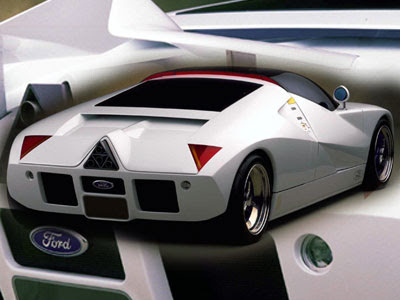
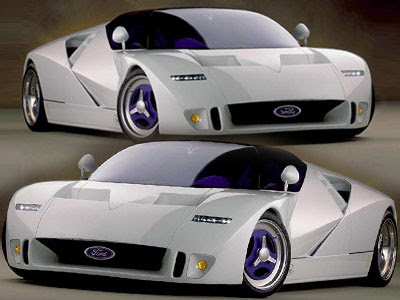
2010 Ford GT90 Super Sport Car Concept going to auction

2010 Ford GT90 Super Sport Car Concept

If Ford first introduced the GT90 Concept at the 2010 Detroit Auto Show next month, it would still be one of the most eyecatching cars on the show floor. What's amazing is that Ford unveiled the GT40 successor nearly 15 years ago. What's more, even by today's standards it's still a supercar among supercars.
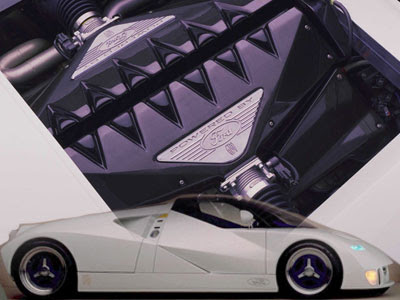
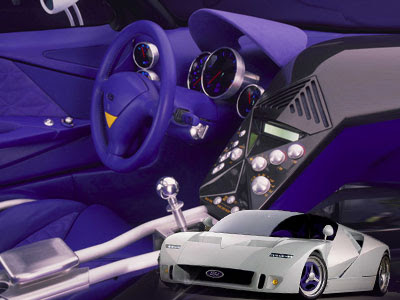
The quad-turbocharged 6.0-litre V12 puts out an estimated 720 horsepower, the body is constructed completely of carbon fiber and top speed is somewhere in the 400 kph range. The only hints that it's not a modern supercar are the all-blue interior and wheels that look dated now.
So what's all the fuss about the GT90 Concept now? RM Auctions in the States has just announced that it will be offering the concept car at its upcoming Arizona sale. That's right, this is your chance to own one of the coolest concept vehicles of all time. This is the first time that the GT90 Concept has ever been publicly for sale at auction, and RM claims that it is in "excellent running condition, having been properly stored and maintained over the year." No estimated on price is given, but we're guessing it will take a large suitcase of cash to take the car home.

2010 Ford GT90 Super Sport Car Concept

The one-off GT90 Concept Car, labeled immediately as "the world's mightiest supercar" by Ford Motor Company on December 6, 1994, was the spiritual successor to the Ford GT40, the product of a colossal feud in the early 1960s between the Blue Oval from Dearborn and the Prancing Horse of Northern Italy. The GT90 draws from the design cues of its heritage and pays homage to the famed Le Mans-winning Ford GT40s of the 1960s, which were created after the failed attempt by Ford to buy out Ferrari.
At a development cost in the neighborhood of $3 million, the GT90 was certainly worthy of pulling styling cues from the original Ford GTs, and although it was never meant for production, it was built according to a Ford press release as a "test bed for technology, engineering and design concepts, and driver-oriented features that eventually may be used in Ford production vehicles."
Officially unveiled to the public in January 1995 at the Detroit Auto Show, the GT90 is finished in bright white with a bright blue and carbon fiber interior. It features a mid engine quad-turbocharged V12 that produces an estimated 720 horsepower and 660 pound-feet of torque. As a result, it had a claimed top speed of 253 mph, which even by today's standards would make it one of the fastest production cars in the world – faster even than a McLaren F1, which was widely considered the world's preeminent supercar at the time.

2010 Ford GT90 Super Sport Car Concept

The engine, which was a 48-valve six-liter V12, had to be combined together with four Garrett Systems T2 turbochargers in order to reach its estimated 720 horsepower and was based on the Ford Modular engine. Created by using parts of two Lincoln V8 engines, engineers removed the last pair of cylinders from the rear of one engine and the first pair of cylinders from the front of the other engine. The cut-down engines were then welded together with the final result being a 90-degree V12, which utilized a 90.2 mm bore and a 77.3 mm stroke to achieve maximum power.
The GT90 features the FFD-Ricardo five-speed manual gearbox found on the XJ220 and, considering the torque load that it is designed to handle, is noted as having a relatively light shift quality. Also borrowed from the XJ220 comes the all around double wishbone suspension that was designed to enable the car to handle well at top speeds.

2010 Ford GT90 Super Sport Car Concept

Using Ford's new "Edge" design philosophy, the car incorporated advanced technology with a mixture of flat planes, angles, glass and triangular shapes that seemingly all collided together. The GT90 was the first car created using this new styling directive from Ford, which went on to be responsible for the creation of other Ford products like the Ka and Cougar. The effect is most impressive and a wonderfully executed stylistic throwback to its GT40 predecessor, which at once stays true to its heritage but acknowledges the advances in modern design. Taken directly from race car technology, the GT90 body panels are molded out of carbon fiber while the chassis is formed out of a honey-comb sectioned aluminum monocoque.
The GT90 is a test bed of advanced technology and design. It sports a tinted, laminated glass bubble over the cockpit and a spoiler that rises off the rear deck at high speeds. According to Ford, it has a "design that tightly enclosed its mechanicals with no wasted space; high tech lighting and blind-spot detection systems; and tiles like those on the space shuttle to shield the V12's exhaust outlets."

2010 Ford GT90 Super Sport Car Concept

After its unveiling in Detroit, the GT90 made its rounds on the Auto Show Circuit in 1995, traveling around the world to Frankfurt and as far away as Tokyo. With few other showings in between, the car recently was shipped over to Europe to be on display in the Ford of Europe 2008 exhibit at the Goodwood Festival of Speed. After returning home, the car was shipped to Alabama where it was on display as part of the Mustang 45th Anniversary Celebration.
This superb concept car remains in excellent running condition, having been properly stored and maintained over the years in between its show appearances. RM Auctions is proud to publicly offer the GT90 for the first time ever at auction. A remarkable one-off piece of automotive history and cutting-edge design, its offering may very well be a once in a lifetime opportunity for Ford devotees and concept car enthusiasts.

Sunday, January 2, 2011

Wings of Nike Sport Cars Concept

Wings of Nike Sport Cars Concept
"Nike of Samothrace - ancient Greek statue - represents Goddess of victory and sea battle. Conveys a sense of action and triumph as well as portraying artful flowing drapery through its features which the Greeks considered ideal beauty", is the inspiration of the name.
Wings of Nike Sport Cars Concept
Idea to this Concept car was to reborn the spirit of victory and passion in different way to honor legends which shouldn't be forgotten. Reviving the spirit of victory and passion to honor the classic Formula 1 cars, designer Darko Nikolic has created a supercar concept dubbed the “Wings of Nike” (WON), representing triumph and ideal beauty in Greek mythology, which brings blood quickening and sophisticated of 50s look with seriousness of limousines from 30's was a huge challenge.
Wings of Nike Sport Cars Concept based off a smorgasbord of 1930s and 1950s era cues, including wings, extended fenders, chrome bumper, suicide doors, and a roadster style rear end. The chassis is formed from lightweight aluminum, and its outer shell from carbon fiber. Capturing the sport heart in the sleek, stylish body of limousine, the futuristic sport sedan flow the lines to connect parts, spreading almost individually, along the whole body for superior aerodynamics.
Wings of Nike Sport Cars Concept
The power engine of the Wings of Nike Sport Cars Concept is a 7.3-liter V-12, generating a comfortable yet potent 750 bhp, delivered by four (all wheel drive) 22-inch dubs, and egged on by a 7-speed dual plate clutch transmission. The brakes are ceramic for superior stopping power, and the black and red exterior finish to symbolize its sporty character, which further is enhanced by a chromed bumper, white circles on tires and doors opening backwards.
Wings of Nike Sport Cars Concept
Technical specifications:
Class: grand tourer, supercar
Type: 4-door sedan
Body made of: carbon fibre with aluminum sub-frames/ aluminium
Engine: 7.3l V-12 (750 bhp)
Transmission: rear-mid based 7 speed dual clutch/twin plate clutch
Layout: front-engined, all-wheel drive
Breaks: ceramic breaks by Brembo

Design: Darko Nikolić
Rhinoceros 3D modeling: Darko Nikolić
V Ray renderings: Miloš Ličina
Photography director: Darko Nikolić
Post production: Darko Nikolić
Wings of Nike Sport Cars Concept

Wings of Nike Sport Cars Concept

Wings of Nike Sport Cars Concept
"Nike of Samothrace - ancient Greek statue - represents Goddess of victory and sea battle. Conveys a sense of action and triumph as well as portraying artful flowing drapery through its features which the Greeks considered ideal beauty", is the inspiration of the name.
Wings of Nike Sport Cars Concept
Idea to this Concept car was to reborn the spirit of victory and passion in different way to honor legends which shouldn't be forgotten. Reviving the spirit of victory and passion to honor the classic Formula 1 cars, designer Darko Nikolic has created a supercar concept dubbed the “Wings of Nike” (WON), representing triumph and ideal beauty in Greek mythology, which brings blood quickening and sophisticated of 50s look with seriousness of limousines from 30's was a huge challenge.
Wings of Nike Sport Cars Concept based off a smorgasbord of 1930s and 1950s era cues, including wings, extended fenders, chrome bumper, suicide doors, and a roadster style rear end. The chassis is formed from lightweight aluminum, and its outer shell from carbon fiber. Capturing the sport heart in the sleek, stylish body of limousine, the futuristic sport sedan flow the lines to connect parts, spreading almost individually, along the whole body for superior aerodynamics.
Wings of Nike Sport Cars Concept
The power engine of the Wings of Nike Sport Cars Concept is a 7.3-liter V-12, generating a comfortable yet potent 750 bhp, delivered by four (all wheel drive) 22-inch dubs, and egged on by a 7-speed dual plate clutch transmission. The brakes are ceramic for superior stopping power, and the black and red exterior finish to symbolize its sporty character, which further is enhanced by a chromed bumper, white circles on tires and doors opening backwards.
Wings of Nike Sport Cars Concept
Technical specifications:
Class: grand tourer, supercar
Type: 4-door sedan
Body made of: carbon fibre with aluminum sub-frames/ aluminium
Engine: 7.3l V-12 (750 bhp)
Transmission: rear-mid based 7 speed dual clutch/twin plate clutch
Layout: front-engined, all-wheel drive
Breaks: ceramic breaks by Brembo

Design: Darko Nikolić
Rhinoceros 3D modeling: Darko Nikolić
V Ray renderings: Miloš Ličina
Photography director: Darko Nikolić
Post production: Darko Nikolić
Wings of Nike Sport Cars Concept